


★Estate-Tier Control · Authorized Dealer
Crestron.Built to the home,not the other way around.
Crestron is the platform $5M estates buy when nothing else bends far enough. A 50-year American manufacturer. Every touch panel made by Crestron. Every keypad engraved to spec. Every line of code written on-site, for your home, not adapted from a driver library.
Why Crestron
When custom is the requirement, not the upgrade.
- 01
Bespoke programming
Every scene, palette, UI screen, and macro hand-coded on site for your home. No driver library, no "this is what we did at the last house" shortcuts. The system is built around how YOU live.
- 02
Reference-grade hardware
Crestron makes its own touch panels (4-to-24-inch architectural), keypads (engraved-to-spec backlit buttons), AV processors, lighting controllers. Vertically integrated — one neck to grab when something needs escalation.
- 03
Made in USA
Manufacturing in Rockleigh, NJ since 1971. Fifty years of refinement. Used by Apple, Goldman Sachs, the White House, and every Fortune 100 boardroom. That commercial-grade DNA carries into residential.
- 04
No platform lock-out
Crestron Home OS reads your home's data. The programming file is yours — any authorized Crestron dealer in the world can pick up the project from the file. The system is not held hostage by one installer.
Reference theaters
One button. The room comes alive.
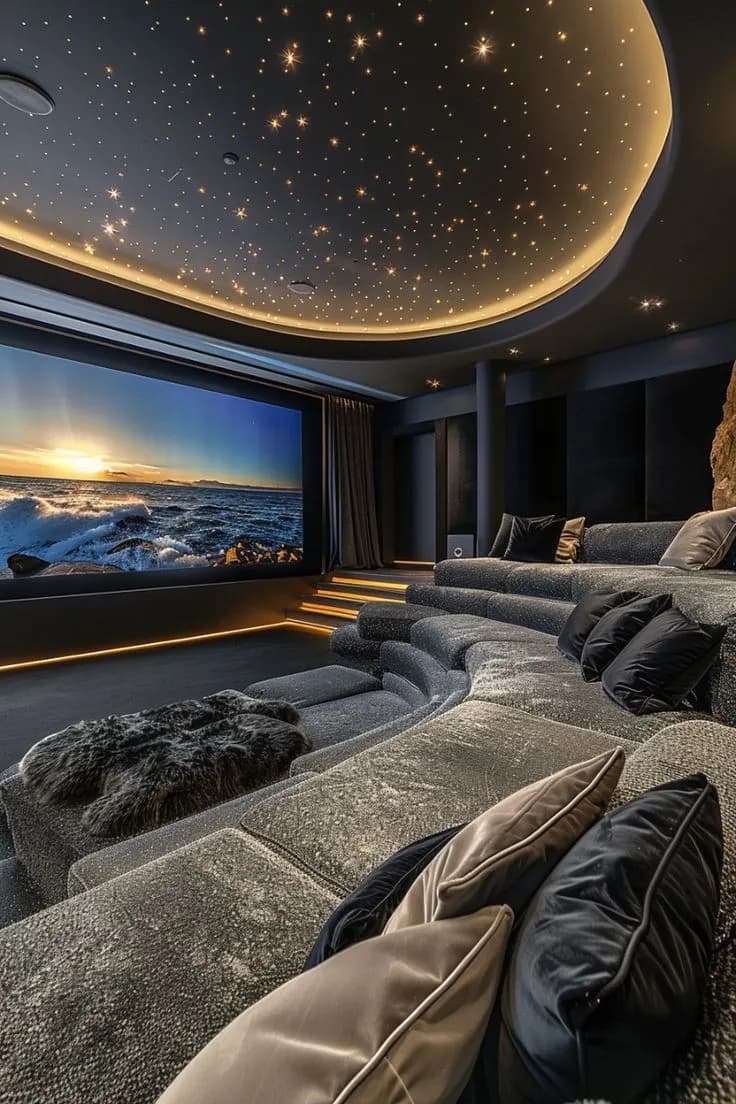
Trinnov Altitude processors, dual JVC NZ9 projectors, Stewart Filmscreen acoustically-transparent screens, custom riser microphones for room correction. One button to fire the room: projector wakes, screen drops, lights fade, AVR powers up, source selects, scene begins. Atmos 9.4.6 routine.
Architectural touch panels
Part of the wall, not bolted on.
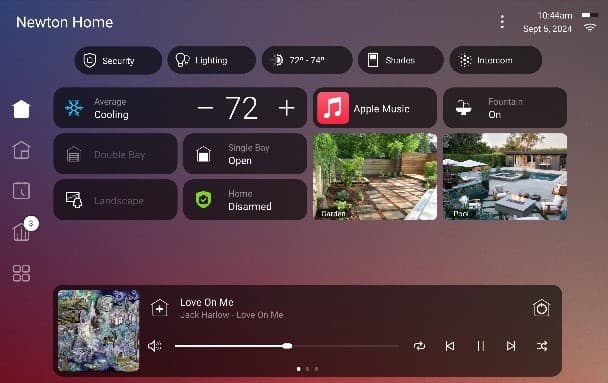
In-wall 7-to-13-inch Crestron touch panels in matte or gloss bezel finishes specified by the interior designer. Keypads with engraved button labels — Movie, Dinner, Goodnight, Welcome — in fonts and metals matched to the cabinet hardware.
Lighting + shades
Orchestrated to the minute.
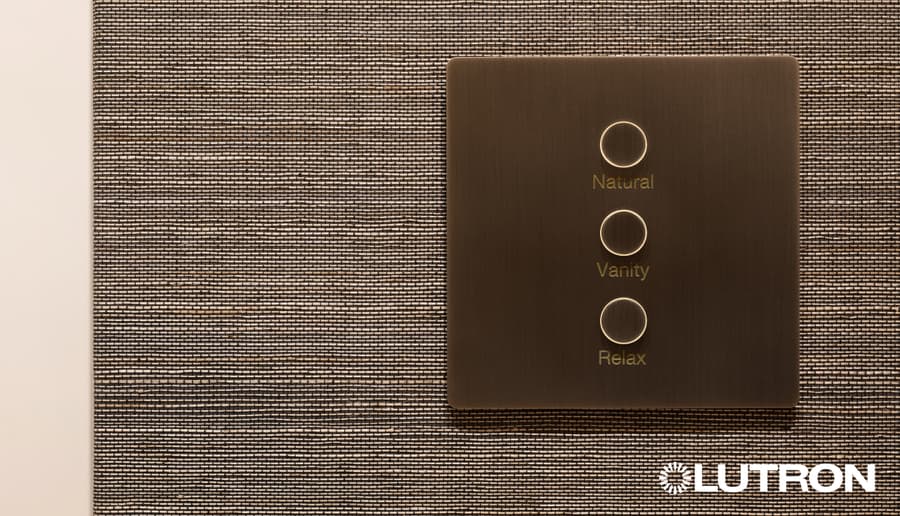
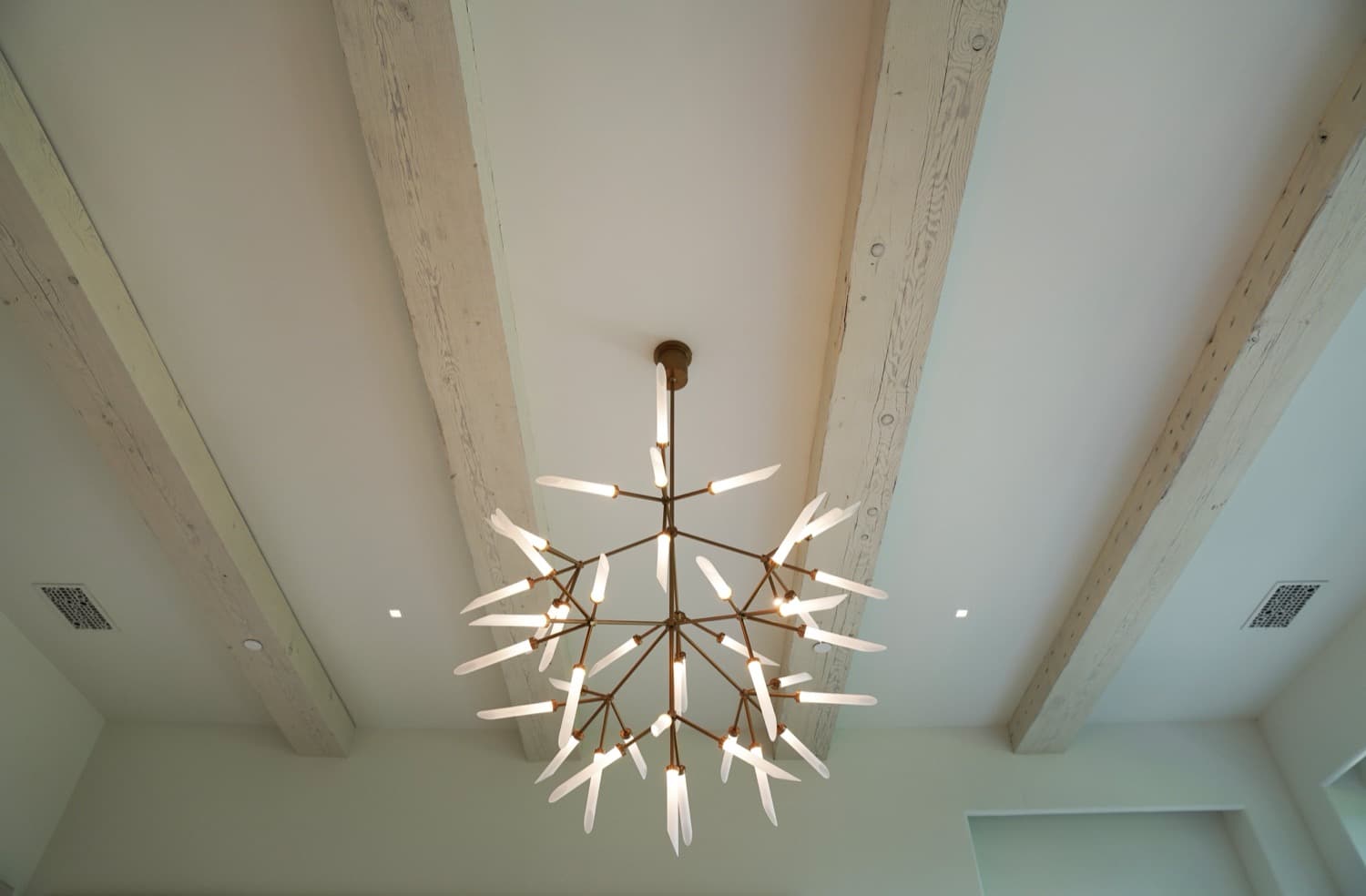
Lutron HomeWorks running underneath for actual lighting + shade control; Crestron sitting above as the unified design layer. Astronomical clock + occupancy sensing + daylight harvesting. Every fixture is part of a named scene, every scene is part of a daily palette.
Distributed AV at scale
Every TV. Every source. No clutter.
Crestron DM NVX video matrix (24+ source/zone capable, 4K HDR with no transcoding), Crestron Sonnex audio DSP, in-house Crestron amplifier rack. Two-zone, six-zone, sixteen-zone whole-home audio. Every TV in the house can play any source — one rack, no clutter, all wired.
A 50-year investment
Why Crestron wins at year fifteen.
The cheap-system pitch is that consumer-tier gear has caught up. It hasn't — not at the layer that matters fifteen years post-install. Here's why Crestron stays standing:
Hardware longevity.
Crestron processors and DM video matrices regularly stay in service 12-15 years before retirement. Consumer-tier processors are deprecated in 4-7. Crestron stops selling certain SKUs but keeps firmware-updating fielded units for a decade.
On-site programmability.
Year eight, you remodel the kitchen and want the keypads moved. Daniel pulls the project file, reprograms the keypads on site, commits the change, walks. No cloud account, no manufacturer ticket, no platform deprecation risk.
Vertical integration.
One company makes the touch panel, the keypad, the AV matrix, the DSP, the lighting controller. When something escalates, there's one engineering team to call — not three vendors each blaming the others.
Best for
Where Crestron belongs.
$3M+ new construction
Architect engaged, interior designer engaged, the home itself is bespoke. Crestron belongs on this project the way custom millwork does. Average install: $150-400k.
Estate with multiple buildings
Main house + pool house + guest cottage + barn — all networked, all on one unified UI. Crestron handles multi-building topology natively where consumer systems struggle. Average install: $250-650k.
Bespoke theater + media room
Reference Atmos theater, custom riser construction, hand-built equipment rack. Crestron is the only platform that ties a true reference theater to the rest of the home invisibly. Theater scope alone: $185-650k.
Recent installs
Crestron in Kansas City estates.
Crestron is where I go when the project doesn't fit any preset. A $5M home with three theater rooms, custom keypads in five metal finishes, video distribution to twenty-two TVs, lighting orchestration across the main house plus the pool house plus the guest cottage — Crestron can be programmed for exactly that. Control4 can't. Most systems can't. That's why a $4M+ estate almost always ends up on Crestron once the architect sees what's possible.
— Daniel Alon · Founder · IntegrateIT
Common questions
What is Crestron?
Crestron is a 50-year-old American manufacturer of residential + commercial control systems. The platform is end-to-end custom — touch panels, keypads, video matrices, audio DSPs, lighting controllers, shade motors — all built by Crestron, all programmed bespoke per project. There is no off-the-shelf "Crestron app" the way there's a Control4 app; every Crestron home gets its own custom-coded UI designed by the dealer.
Crestron vs Control4 — which is right for my home?
Crestron is best for $3M+ estates, multi-building properties, or any home where the install is architecturally specified (touch panels behind glass, custom keypad engraving, video distribution to 20+ TVs, hand-tuned audio in every zone). Control4 is best for $1-3M homes where a refined-but-standardized platform is enough. Daniel installs both and will tell you straight which one fits your project — call (913) 804-7575.
How much does Crestron cost?
Crestron projects in the Kansas City metro start around $85k for a meaningful whole-home install and run to $500k+ for full estate-scale jobs (multi-zone video distribution, custom-engraved keypads, hand-built audio system, dedicated AV closet with rack + UPS + thermal management). The platform cost is real, but the differentiator is the custom programming labor — 80-200+ hours per project, all done on-site.
Why does Crestron cost more than Control4?
Three reasons. (1) Hardware: Crestron makes its own touch panels (the 7", 10", 13", and architectural in-wall models are reference-grade), lighting controllers, AV processors. Higher build cost than the consumer-tier hardware Control4 wraps. (2) Programming: custom code per project, written on-site, not selected from a driver library. (3) Support: enterprise-grade SLA, used by Fortune 100 corporate AV departments — that service standard carries over to residential.
Can you mix Crestron with Lutron and Sonos?
Yes — and we often do. A typical $5M estate install: Crestron Home OS at the control layer, Lutron HomeWorks underneath for lighting + shades, Sonos or Triad amplification for whole-home audio, Trinnov processors for the dedicated theater. Crestron is the unified UI; the layer underneath is the best component for each job.
How long does a Crestron install take?
New construction: 8-16 weeks from rough-in to commissioning, paced with the architectural schedule. Custom programming starts during construction and continues 4-6 weeks past handoff to refine scenes as the family lives with it. Retrofit installs in finished homes are slower — typically 12-24 weeks because of access constraints.
Is Crestron the right choice for my home?
If you're building a $3M+ home with a dedicated architect and interior designer, Crestron is almost always the right platform — it bends to the project where Control4 asks the project to bend to it. If your project is $1-3M and you want a refined system but not a bespoke one, Control4 is usually the better economic answer.
See a working Crestron estate before you commit.
For projects $3M+, Daniel arranges in-person walkthroughs at finished Crestron installs across the Kansas City metro. You see the touch panels you'll have. You feel the audio in the actual room. You meet the homeowner.